
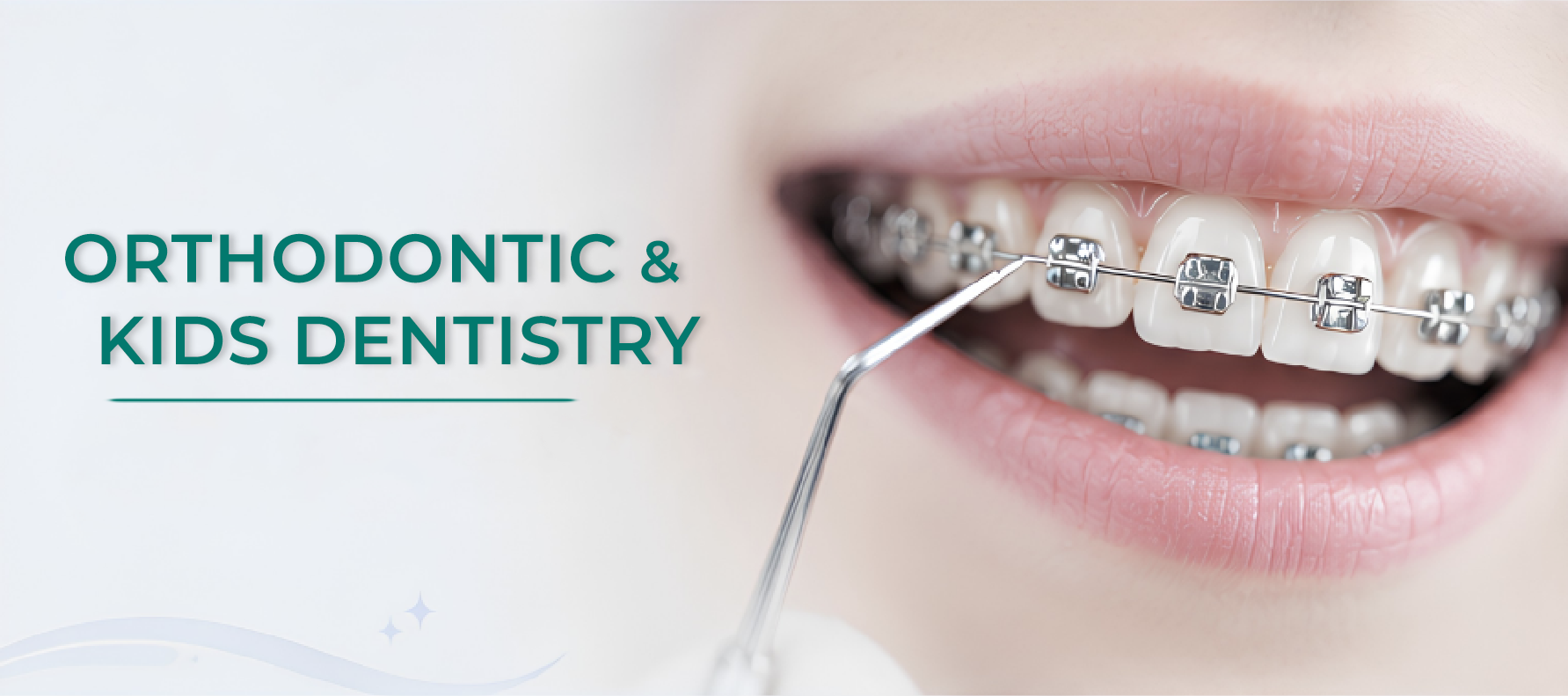
Orthodontics(Fixed Braces & Clear Aligners)
Orthodontic Treatment for the Management of Tooth Alignment
Orthodontic treatment is used to align teeth and manage bite relationships. Properly aligned teeth may be easier to clean and can contribute to improved oral function and long-term dental health. A range of orthodontic treatment options is available to address different clinical needs.
What Is Orthodontic Treatment?
Orthodontic treatment involves the use of dental appliances to gradually move teeth into more favourable positions. It may be used to manage conditions such as crowding, spacing, protruding teeth, and bite discrepancies.
Treatment options include fixed braces and clear aligners. The suitability of each option depends on individual clinical findings.

Fixed Braces
Fixed braces consist of brackets attached to the teeth and connected by wires and elastic components. These appliances apply controlled forces over time to guide tooth movement.
Fixed braces may be considered for a wide range of orthodontic cases, including those involving more complex tooth movement or bite relationships. Available options may include metal or ceramic brackets, depending on clinical requirements.

Clear Aligners
Clear aligners are removable, custom-made trays designed to move teeth incrementally. They are made from transparent material and are worn for most of the day as prescribed.
Aligners can be removed for eating and oral hygiene. Consistent wear is required for effective treatment. Clear aligners may be suitable for selected mild to moderate orthodontic cases, subject to clinical assessment.
Fixed Braces and Clear Aligners: Considerations
Both fixed braces and clear aligners are established orthodontic treatment options. Fixed braces allow continuous appliance wear and may provide greater control in certain clinical situations. Clear aligners offer a removable alternative and may be preferred by some patients.
The choice of orthodontic appliance depends on factors such as case complexity, oral hygiene, compliance, and treatment objectives. A clinical examination is required to determine the most appropriate option.
Considerations and Potential Benefits of Orthodontic Treatment
Orthodontic treatment may improve tooth alignment and bite relationships. In some cases, this can facilitate oral hygiene, reduce uneven tooth wear, and support periodontal health. Treatment outcomes vary depending on individual factors and adherence to treatment instructions.
If you are considering orthodontic treatment, a dental consultation is recommended. The dentist will assess your teeth, bite, and jaw relationship and discuss appropriate management options based on your clinical needs.
Contact us via phone or WhatsApp to arrange an appointment.
Book an appointment